The hospitality and restaurant industry is one of the most demanding industries in the world. Hotels, restaurants, cafes, resorts, and food & beverage businesses operate in intense environments where customer expectations are high, and employee pressure is constant.
Unlike traditional office jobs, hospitality businesses run around the clock. Teams work overnight shifts, weekends, holidays, and peak seasonal periods. At the same time, businesses must maintain excellent customer service while controlling labor costs and staying compliant with local labor laws.
This creates workforce management challenges for hospitality businesses across the GCC and MENA region. From employee turnover and scheduling issues to payroll complexity and labor shortages, hospitality companies need efficient systems to manage their workforce successfully.
So, what are the biggest workforce management challenges in hospitality? How can businesses solve them? And how is localized HR software like ZenHR essential for restaurants and hospitality businesses in MENA?
Let’s take a look.
What Is Workforce Management in Hospitality?
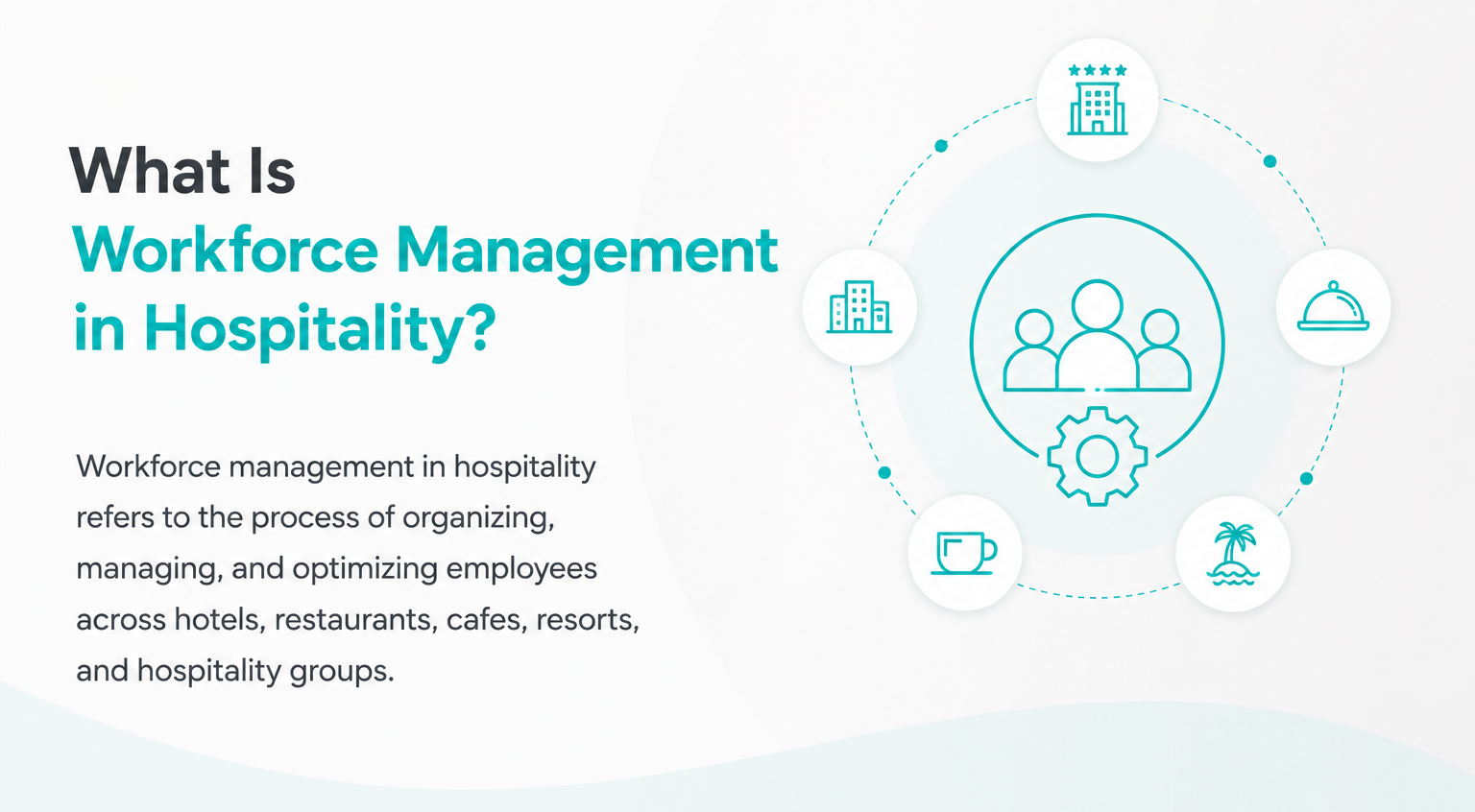
Workforce management in hospitality refers to the process of organizing, managing, and optimizing employees across hotels, restaurants, cafes, resorts, and hospitality groups.
This includes scheduling employees, tracking attendance, managing payroll, calculating overtime, monitoring employee performance, handling leave requests, and ensuring compliance with labor laws.
It’s simple: businesses need the right employees working at the right time while maintaining operational efficiency and delivering excellent customer experiences.
Why Workforce Management Is So Difficult in Hospitality
The hospitality industry operates very differently from most industries. Customer demand changes constantly throughout the day, week, and season. Restaurants become busy during lunch and dinner rushes, while hotels experience fluctuations during holidays, events, and travel seasons.
At the same time, hospitality businesses often manage large frontline teams across multiple branches or properties. Employees may work rotating shifts, overnight hours, split schedules, or seasonal contracts.
This makes workforce planning far more complicated than in a standard office environment.
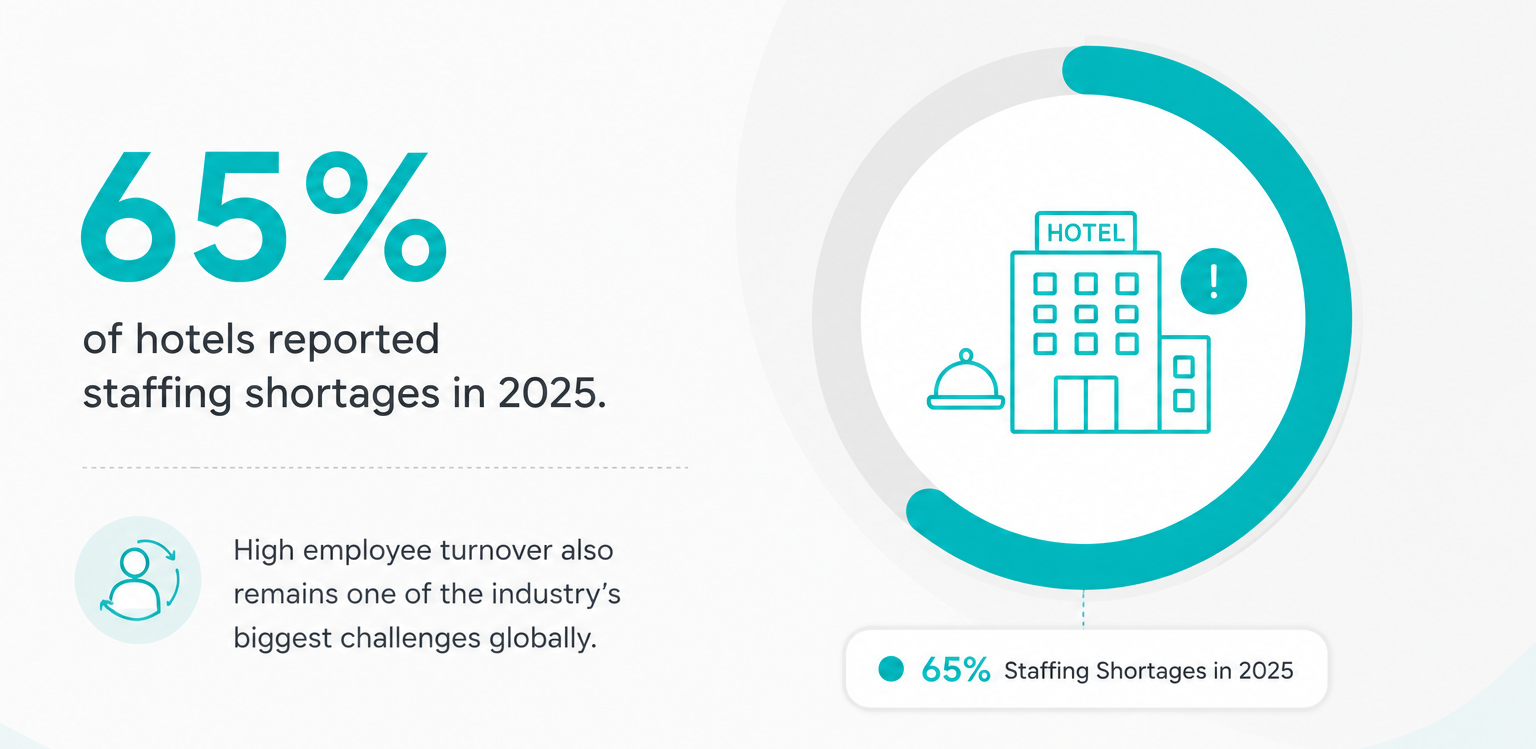
According to a study, 65% of hotels reported staffing shortages in 2025. High employee turnover also remains one of the industry's biggest challenges globally.
High Employee Turnover in Hospitality
Employee turnover is one of the most expensive workforce challenges in the hospitality industry. Many employees leave due to burnout, stressful work environments, inconsistent schedules, limited career growth, or payroll issues.
Hospitality businesses are constantly hiring and training new employees, which increases operational costs and reduces productivity.
According to research, replacing a restaurant employee can cost businesses thousands of dollars in recruitment, onboarding, and training expenses.
High turnover also impacts customer experience. When businesses continuously lose experienced staff, service quality often declines.
To reduce turnover, hospitality businesses should focus on improving employee experience. Flexible scheduling, better communication, career development opportunities, fair shift distribution, and accurate payroll processes can significantly improve employee retention.
Modern HR software also helps employees feel more engaged by giving them access to schedules, requests, attendance records, and HR services directly through mobile apps.
Scheduling Challenges in Restaurants and Hotels
Scheduling employees in hospitality is extremely complex. Managers must account for busy hours, employee availability, labor laws, overtime limits, absences, and last-minute schedule changes.
Manual scheduling often creates problems such as understaffing, overstaffing, scheduling conflicts, and excessive overtime costs.
When businesses are understaffed, customer experience suffers. When businesses are overstaffed, labor costs increase unnecessarily.
Using workforce management software helps automate scheduling and improve operational efficiency. Hospitality businesses can forecast labor demand more accurately, create optimized schedules faster, and reduce scheduling errors.
Employees also benefit from digital scheduling tools because they can view schedules instantly, request shift changes, and swap shifts more easily.
Labor Shortages in the Hospitality Industry
Labor shortages continue to affect hotels and restaurants worldwide. Hospitality businesses are struggling to attract and retain qualified employees, especially after major workforce changes across the global market.
Several factors contribute to labor shortages, including burnout, changing employee expectations, wage competition, and seasonal demand fluctuations.
According to a survey, staffing shortages remain one of the biggest operational concerns for hotels.
To overcome labor shortages, hospitality businesses need to improve recruitment, onboarding, and employee retention strategies. Businesses that offer flexible work environments, better employee experiences, and clear growth opportunities are often more successful in retaining staff.
Technology also plays a major role. Automating HR and workforce management processes reduces administrative pressure and allows managers to focus more on employee engagement and operational performance.
Payroll Complexity in Hospitality
Payroll management in hospitality is far more complicated than in many other industries. Restaurants and hotels often manage overtime calculations, shift-based pay structures, service charges, allowances, multiple pay rates, and compliance requirements.
Handling payroll manually increases the risk of calculation errors and delayed payments. Even small payroll mistakes can negatively impact employee trust and satisfaction.
Hospitality businesses also operate across different labor laws and payroll regulations, especially in GCC countries, where compliance requirements are strict.
Payroll software simplifies these challenges by automating salary calculations, overtime management, attendance integration, deductions, and compliance reporting.
This improves payroll accuracy while reducing administrative workload for HR and finance teams.
Managing Multi-Location Hospitality Operations
Many hospitality companies manage multiple branches, hotels, restaurants, or franchise locations. Without centralized systems, it becomes difficult to maintain consistency across operations.
Managers often struggle with disconnected employee data, inconsistent HR processes, poor visibility across locations, and reporting limitations.
Cloud-based workforce management software helps hospitality businesses centralize operations across all branches. Managers can access attendance records, payroll data, workforce analytics, and scheduling information from one unified platform.
This improves operational control while helping businesses scale more efficiently.
Compliance and Labor Law Challenges
Hospitality businesses in GCC and MENA countries must comply with various labor regulations and government requirements.
This includes WPS compliance, overtime regulations, leave management, end-of-service benefits, social insurance requirements, and employee documentation.
Managing compliance manually increases the risk of penalties and administrative errors.
HR software helps automate compliance processes by maintaining accurate records, generating government reports, and ensuring payroll calculations align with local labor laws.
For businesses operating across multiple GCC countries, localized compliance support becomes even more important.
How Technology Is Transforming Workforce Management in Hospitality
Technology is changing how hospitality businesses manage employees. Modern workforce management systems help businesses reduce labor costs, improve scheduling accuracy, increase employee satisfaction, and streamline HR operations.
Mobile accessibility is especially important in hospitality because many employees are frontline workers who do not operate from desks or offices.
Employees now expect digital HR experiences where they can access schedules, request leave, submit documents, and communicate with managers directly from their phones.
At the same time, managers benefit from workforce analytics and reporting tools that improve staffing decisions and operational planning.
According to Hospitality Net, predictive scheduling and workforce analytics are becoming increasingly important for hospitality businesses managing labor shortages and rising operational costs.
Why ZenHR Is the Best Workforce Management Solution for Hospitality Businesses in MENA
When it comes to hospitality workforce management in the GCC and MENA region, ZenHR stands out as one of the best localized HR and payroll platforms available.
Unlike many global HR systems that lack regional compliance support, ZenHR is designed specifically for businesses operating in the Middle East.
ZenHR helps hospitality businesses simplify workforce management while improving operational efficiency and employee experience.
The platform supports restaurants, hotels, cafes, food & beverage groups, resorts, and multi-location hospitality businesses across Saudi Arabia, UAE, Jordan, Kuwait, Egypt, Iraq, and the wider MENA region.
One of ZenHR’s biggest advantages is its localized payroll and compliance capabilities. The platform supports WPS compliance, GOSI integration, overtime calculations, end-of-service benefits, and multi-country payroll management.
ZenHR also simplifies scheduling and attendance management. Businesses can manage rotating shifts, overnight schedules, attendance tracking, and employee requests from one centralized platform.
Employees can access schedules, submit leave requests, track attendance, and communicate with HR directly through mobile self-service tools. This improves transparency and employee engagement while reducing administrative work for managers.
Another major advantage is ZenHR’s fully bilingual Arabic and English interface, which is essential for hospitality businesses managing diverse workforces across the GCC and MENA region.
For multi-branch hospitality groups, ZenHR provides centralized workforce visibility across all locations, helping managers standardize HR operations and improve reporting.
You can learn more about ZenHR’s hospitality and food & beverage solutions here.
Final Thoughts
The hospitality and restaurant industry faces some of the most complex workforce management challenges in the world. High employee turnover, labor shortages, scheduling complexity, payroll management, and compliance requirements create constant operational pressure for businesses.
Without the right systems in place, these challenges can increase labor costs, reduce employee satisfaction, and negatively impact customer experiences.
Modern workforce management software helps hospitality businesses automate operations, improve workforce visibility, reduce manual work, and create better employee experiences.
For hospitality businesses in GCC and MENA countries, choosing a localized HR and payroll solution is critical.
Platforms like ZenHR provide hospitality businesses with the tools they need to manage employees more efficiently while staying compliant with regional labor laws and improving operational performance.

ZenHR