Leadership gaps don’t usually happen slowly. They happen all at once when a key employee resigns, retires, or moves on unexpectedly.
That’s why in 2026, more companies are shifting from reactive hiring to proactive succession planning.
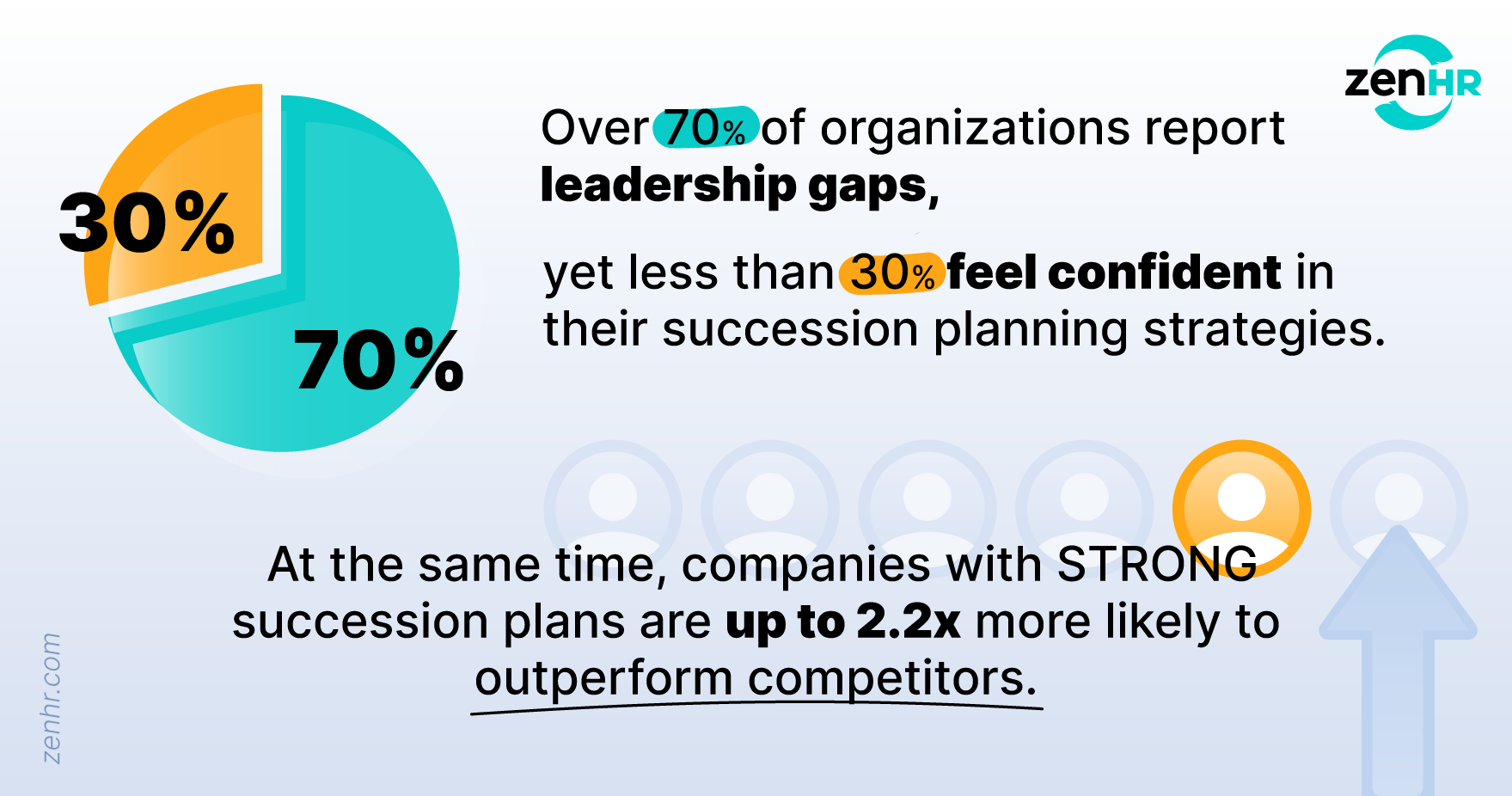
According to industry research, over 70% of organizations report leadership gaps, yet less than 30% feel confident in their succession planning strategies. At the same time, companies with strong succession plans are up to 2.2x more likely to outperform competitors.
So what exactly is succession planning, and how can you do it right?
What is Succession Planning?
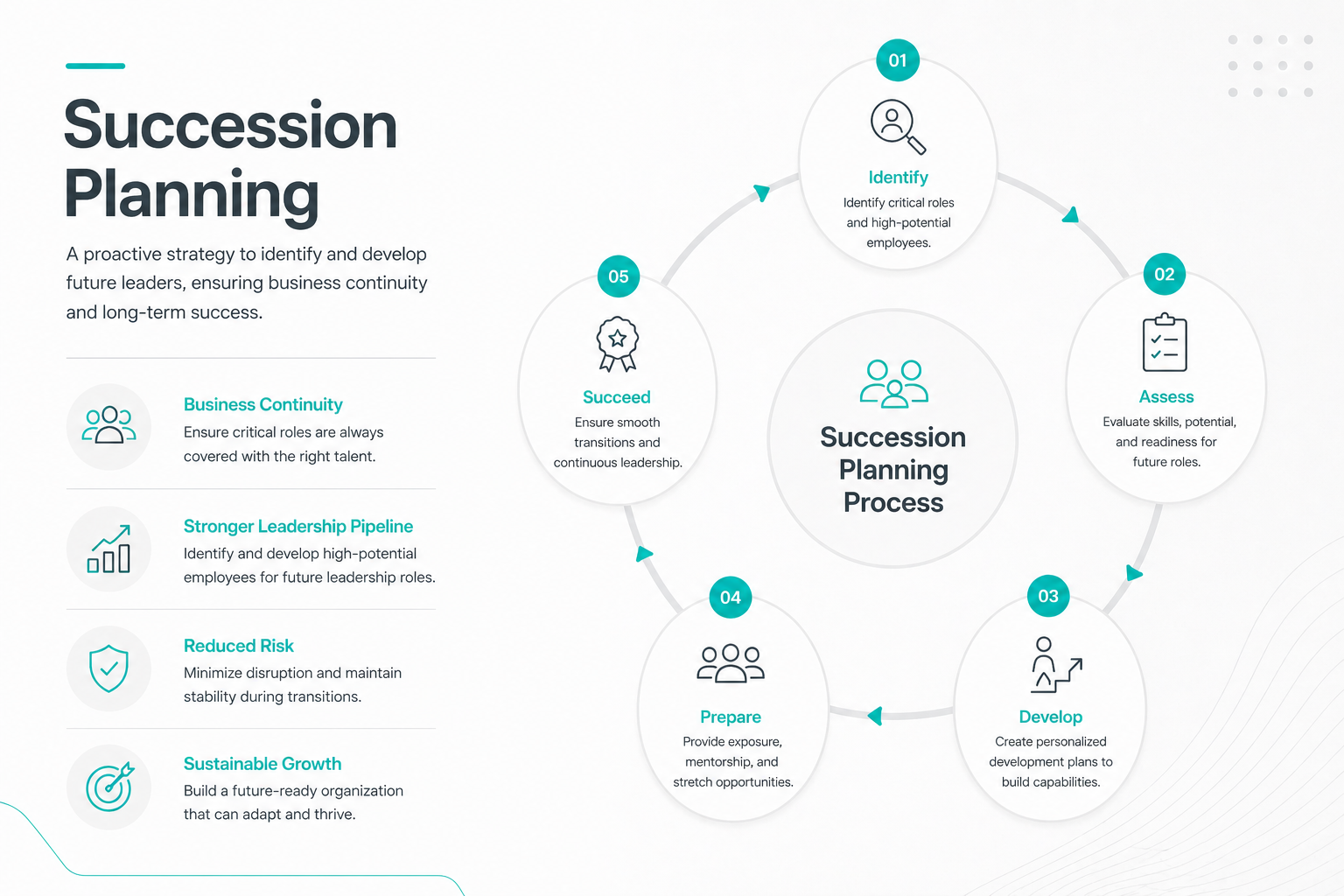
Succession planning is the process of identifying and developing employees who can step into critical roles when they become vacant.
Instead of scrambling to hire externally when someone leaves, you already have a pipeline of ready (or nearly ready) talent.
Think of it as:
- A long-term talent strategy
- A risk management tool
- A way to build leadership from within
In simple terms, succession planning ensures that your business keeps running smoothly, no matter what happens.
Succession Planning Framework
A strong succession planning framework connects people, roles, and future business needs.
At its core, it includes:
- Identifying critical roles that impact business continuity
- Mapping required skills and competencies for those roles
- Evaluating internal talent against those requirements
- Building development plans to close gaps
Modern organizations are also integrating data and AI into this framework, allowing HR teams to make smarter, faster decisions based on real insights, not guesswork.
Why Succession Planning is Important
Succession planning is no longer optional, especially in fast-growing or multi-entity organizations.
Here’s why it matters:
1. Reduces Business Risk
When key roles are left vacant, operations slow down. Succession planning ensures zero disruption.
2. Improves Employee Retention
Employees are more likely to stay when they see clear growth opportunities. In fact, studies show that career development is one of the top reasons employees remain in a company.
3. Saves Hiring Costs
Hiring externally, especially for senior roles,s is expensive and time-consuming. Internal successors reduce both.
4. Builds Stronger Leaders
Instead of hiring leaders, you develop them internally, aligned with your company culture and goals.
5. Supports Long-Term Growth
Succession planning aligns your workforce with your future business strategy, not just current needs.
Comparing: Existing Employees vs New Hires
One of the biggest questions in succession planning is whether to promote internally or hire externally.
Here’s how they compare:
|
Factor |
Existing Employees |
New Hires |
|
Time to productivity |
Faster |
Slower |
|
Cultural fit |
Strong |
Uncertain |
|
Cost |
Lower |
Higher |
|
Fresh perspective |
Limited |
High |
|
Risk level |
Lower |
Higher |
The best approach isn’t choosing one over the other; it’s having visibility into both.
That’s where modern succession planning tools come in, helping you evaluate internal talent and external candidates side by side.
8 Proven Strategies for Succession Planning
A successful succession plan isn’t built overnight. It requires a clear strategy.
Here are eight proven approaches:
1. Start Early
Don’t wait for a resignation. Plan at least 6–12 months ahead for critical roles.
2. Focus on Critical Roles First
Not every role needs a successor. Prioritize positions that impact operations the most
.
3. Use Data, Not Assumptions
Evaluate employees based on skills, performance, and potential, not just opinions.
4. Develop Talent Continuously
Succession planning isn’t just identifying people; it’s preparing them.
5. Create Multiple Successors
Avoid relying on a single person. Build a bench of candidates.
6. Combine Internal and External Talent Pools
Strong plans include both internal employees and external candidates.
7. Align with Business Strategy
Your succession plan should reflect where your company is going, not where it is today.
8. Use Technology to Scale
Manual succession planning doesn’t work at scale. Modern HR systems automate and simplify the process.
8 Steps in the Succession Planning Process
If you’re building your process from scratch, here’s a simple step-by-step structure:
Step 1: Identify Critical Roles
Focus on positions that are essential for business continuity.
Step 2: Define Role Requirements
Outline the skills, experience, and competencies needed.
Step 3: Assess Current Employees
Evaluate internal talent based on performance and potential.
Step 4: Identify Potential Successors
Shortlist employees who could grow into those roles.
Step 5: Evaluate Readiness Levels
Determine if candidates are ready now, soon, or later.
Step 6: Build Development Plans
Close skill gaps through training, mentoring, and experience.
Step 7: Include External Candidates
Leverage talent pools to identify strong external options.
Step 8: Monitor and Update Regularly
Succession planning is ongoing, not a one-time activity.
Why You Need ZenHR for Your Succession Planning
Succession planning becomes significantly more effective when it’s built into your HR system, not managed in spreadsheets. That’s exactly where ZenHR comes in.
Succession Planning on ZenHR is a fully integrated talent management feature designed to help you plan ahead, reduce risk, and build a strong leadership pipeline.
Here’s how it works in practice:
Built Around Your Organizational Structure
ZenHR aligns succession planning with your existing org chart and position framework, so everything reflects your real business structure.
Identify Critical Roles with Clarity
You can easily define which roles are essential to your organization, ensuring your focus stays where it matters most.
Manage and Track Successors
HR teams can nominate potential successors and track their progress over time, creating a clear and structured talent pipeline.
Assess Readiness Levels
Each candidate can be evaluated based on how ready they are:
- Ready now
- Ready soon
- Ready later
This gives you immediate visibility into your risk level for each role.
Powered by ZenAI for Smarter Decisions
ZenHR uses ZenAI to take succession planning to the next level:
- For internal candidates, ZenAI matches employees to roles based on required competencies
- For external candidates, ZenAI analyzes profiles from your ZenATS Talent Pool and compares them to job requirements
This gives you a complete, data-driven view of all possible successors, internal and external.
Read more about ZenHR’s Succession Planning feature.
One System, Complete Visibility
Because everything is integrated within ZenHR, you can:
- Connect succession planning with performance data
- Align development plans with real skill gaps
- Make strategic decisions based on accurate insights
No spreadsheets. No guesswork. Just clarity.
Succession Planning Examples
To make this more practical, here are a few real-world scenarios:
Example 1: Replacing a Finance Director
Instead of hiring externally, a company identifies two internal managers:
- One is ready in 3 months
- One is ready in 12 months
Both are developed simultaneously, reducing risk completely.
Example 2: Expanding into a New Market
A company entering a new country needs leadership roles filled quickly.
With succession planning:
- Internal candidates are evaluated first
- External candidates from the talent pool are compared
The company fills roles faster with better-fit leaders.
Example 3: High-Growth Startup Scaling
A fast-growing company maps out future leadership roles and prepares employees in advance.
Result:
- Faster promotions
- Higher retention
- Stronger leadership pipeline
Conclusion
Succession planning is no longer just an HR initiative; it’s a business-critical strategy.
In a world where talent moves fast and competition is high, companies that plan ahead will always have the advantage.
By identifying future leaders, developing internal talent, and leveraging data-driven insights, you can build a workforce that’s ready for anything.
And with ZenHR, succession planning becomes simple, structured, and scalable, giving you the confidence to grow without disruption.

ZenHR