Gen Z is no longer “the future of work.” They are already here, joining teams, applying for jobs, becoming managers, and changing how companies think about culture, communication, flexibility, and employee experience.
For HR teams, understanding Gen Z in the workplace is not about labeling them as “difficult,” “too sensitive,” or “hard to manage.” It is about understanding what this generation values, what motivates them, and what makes them stay.
Gen Z employees grew up in a very different world. They are digital-first, highly aware of mental health, exposed to global conversations from a young age, and used to fast communication. They also entered the workforce during a time of economic pressure, remote work, AI disruption, and changing career expectations.
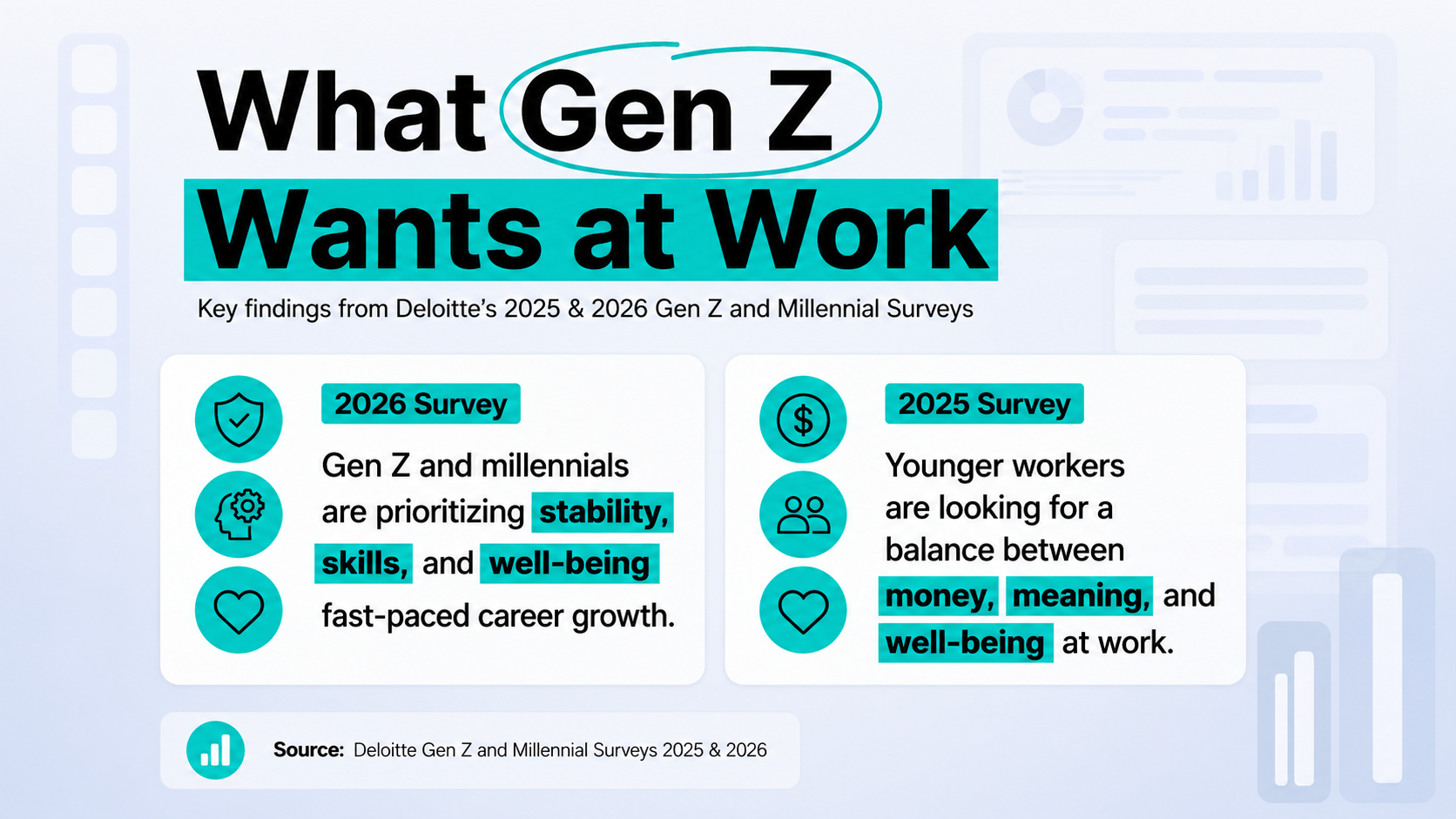
According to Deloitte’s 2026 Gen Z and Millennial Survey, Gen Z and millennials are prioritizing stability, skills, and well-being over fast-paced career growth. Deloitte’s 2025 survey also highlighted that younger workers are looking for a balance between money, meaning, and well-being at work.
So, what does this mean for HR?
It means companies need to rethink how they attract, manage, support, and retain Gen Z employees. Here are the key Gen Z workplace traits HR teams need to know.
Who Is Gen Z?
Gen Z usually refers to people born between the late 1990s and early 2010s. In the workplace, this means many Gen Z employees are now in entry-level roles, junior roles, internships, graduate programs, and even early leadership positions.
They are the first truly digital-native generation. Many of them grew up with smartphones, social media, instant messaging, online learning, and access to information at their fingertips. Because of that, their expectations at work are often different from older generations.
They are not necessarily asking for less work. In many cases, they are asking for work that feels clearer, healthier, more flexible, and more meaningful.
Why HR Teams Need to Understand Gen Z in the Workplace
Every generation changes the workplace in some way. Millennials pushed companies to think more about purpose, flexibility, and work-life balance. Gen Z is taking those expectations even further.
For HR teams, this matters because Gen Z employees are becoming a larger part of the workforce. If companies do not understand what younger employees need, they may struggle with hiring, engagement, performance, and retention.
Understanding Gen Z workplace expectations can help HR teams:
- Improve recruitment strategies
- Create better onboarding experiences
- Support employee engagement
- Reduce early turnover
- Build stronger manager-employee relationships
- Improve workplace culture
- Create better digital employee experiences
The goal is not to redesign the entire workplace for one generation. The goal is to build a workplace that is clearer, healthier, and more human for everyone.
1. Gen Z Values Flexibility
One of the biggest Gen Z workplace traits is the desire for flexibility.
This does not always mean they want to work from home forever. Many Gen Z employees still value office culture, teamwork, mentorship, and face-to-face learning. But they do not want flexibility to be treated as a special reward. They often see it as a normal part of modern work.
Flexibility can mean hybrid work, flexible hours, remote options, compressed workweeks, or simply more trust in how employees manage their time.
For Gen Z, flexibility is connected to work-life balance. They want to perform well, but they also want time for health, family, personal goals, learning, and rest.
What HR can do
Create clear flexible work policies that explain who is eligible, how flexibility works, and what expectations employees need to meet.
Flexibility works best when it is structured. Employees should know when they need to be available, how performance is measured, and how communication should happen.
The key is to focus less on “Are they sitting at their desk?” and more on “Are they delivering good work?”
2. Gen Z Wants Regular Feedback
Gen Z employees are used to fast feedback. They grew up with likes, comments, messages, ratings, and instant updates. So, when they enter a workplace where feedback only happens once or twice a year, it can feel slow and unclear.
This does not mean they need constant praise. It means they want to know where they stand.
They want to understand:
- Am I doing this correctly?
- What can I improve?
- What does success look like?
- How can I grow in this role?
- What skills should I build next?
Annual performance reviews are still useful, but they are not enough on their own. Gen Z employees often prefer regular check-ins, clear goals, and simple conversations with their managers.
What HR can do
HR teams can encourage managers to have more frequent feedback conversations. These do not need to be long or formal. A short monthly check-in can make a big difference.
Managers should be trained to give feedback that is clear, kind, and useful. Instead of only saying “good job” or “this needs work,” they should explain what went well, what needs improvement, and what the employee can do next.
This helps Gen Z employees feel guided instead of confused.
3. Gen Z Cares About Purpose & Meaning
Gen Z employees often want to know that their work matters. They are more likely to feel engaged when they understand how their role connects to the company’s bigger mission.
This does not mean every job has to “change the world.” It means employees want to understand the value of what they do.
For example, a customer support employee may feel more motivated when they understand how their work improves the customer experience. A payroll officer may feel more connected when they see how accurate payroll supports employee trust. A marketing employee may feel more engaged when they understand how their campaigns support business growth.
SHRM has also highlighted purpose-driven workplaces as an important factor in attracting Gen Z talent.
What HR can do
HR teams can help employees connect their daily tasks to the company’s larger goals. This can start during onboarding and continue through internal communication, team meetings, recognition programs, and manager conversations.
Instead of only telling employees what to do, companies should explain why the work matters.
Purpose does not have to be complicated. Sometimes, it is as simple as helping employees see the impact of their role.
4. Gen Z Is Digital-First
Gen Z expects technology to make work easier, not harder.
They are used to apps that are fast, simple, and easy to use. So, when HR processes are manual, slow, or confusing, it can create frustration.
Things like:
- Printing forms
- Waiting days for simple approvals
- Not knowing leave balances
- Having to ask HR for every small request
- Using outdated systems
- Manually tracking attendance or schedules
For digital-first employees, these processes can feel unnecessary.
Gen Z employees usually prefer self-service tools where they can access information, submit requests, check updates, and complete tasks on their own.
What HR can do
HR teams should focus on creating a smoother digital employee experience. This includes digital onboarding, employee self-service, mobile access, online leave requests, automated approvals, digital payslips, performance tools, and clear HR communication.
This is also where an HR system can make a real difference. With a platform like ZenHR, companies can simplify everyday HR processes such as onboarding, attendance, leave management, payroll, performance, and employee self-service. This gives employees a smoother experience while helping HR teams reduce manual work.
5. Gen Z Wants Growth and Learning Opportunities
Gen Z employees often care a lot about career growth. They want to build skills, learn new things, and understand how they can move forward.
This generation knows that the workplace is changing quickly. AI, automation, remote work, and new technologies are reshaping many jobs. Because of that, many Gen Z employees want to keep learning so they can stay relevant.
Deloitte’s 2025 Gen Z and Millennial Survey found that learning and development is a top priority for younger workers.
But growth does not always mean promotion. It can also mean learning a new skill, working on a new project, joining a mentorship program, attending training, or getting more responsibility.
What HR can do
HR teams should make career development more visible. Employees should not have to guess how growth works inside the company.
This can include:
- Clear career paths
- Learning and development programs
- Mentorship opportunities
- Internal job openings
- Skills-based training
- Manager-led development conversations
Gen Z employees are more likely to stay when they feel they are growing. If they feel stuck, they may start looking elsewhere.
6. Gen Z Values Mental Health and Well-Being
Mental health is one of the biggest topics shaping Gen Z in the workplace.
For many Gen Z employees, well-being is not a nice extra. It is part of how they judge whether a workplace is healthy or not.
They are more open to talking about stress, burnout, anxiety, workload, boundaries, and work-life balance. However, that does not always mean they feel safe discussing these topics with managers. SHRM reported that only 56% of Gen Z workers said they felt comfortable discussing mental health challenges with their managers, citing Deloitte’s 2024 Gen Z and Millennial Survey.
This shows an important gap. Gen Z may care about mental health, but companies still need to build trust before employees feel comfortable asking for support.
What HR can do
HR teams should create a workplace culture where well-being is taken seriously. This does not mean HR has to solve every personal problem. But it does mean companies should look at the work environment and ask:
Are workloads realistic?
Are managers creating unnecessary pressure?
Do employees feel safe asking for help?
Are people encouraged to take time off?
Do employees know where to go for support?
Well-being should not only be a policy on paper. It should show up in how managers lead, how workloads are planned, and how employees are treated.
7. Gen Z Expects Transparency
Gen Z employees value honesty and clear communication.
They are less likely to accept vague answers, unclear policies, hidden salary structures, or confusing career paths. They want to know what is happening, why decisions are made, and where they stand.
This applies to many areas of work, including:
Pay
Promotions
Performance reviews
Company changes
Policies
Career growth
Work expectations
Benefits
When communication is unclear, Gen Z employees may quickly lose trust. And once trust is lost, engagement usually drops.
What HR can do
HR teams should make workplace information easy to access and easy to understand. Policies should not be buried in long documents that no one reads.
Clear employee handbooks, transparent communication, simple HR guides, and regular updates can help employees feel more informed.
Managers also play a big role here. HR should train managers to communicate clearly, explain decisions when possible, and avoid leaving employees guessing.
8. Gen Z Wants Inclusive and Respectful Workplaces
Gen Z tends to care deeply about fairness, respect, and inclusion.
They want to work in environments where people are treated equally, different opinions are heard, and employees feel safe being themselves.
This does not only mean diversity programs. It also means how people are treated in everyday situations.
-Do managers listen?
-Are policies applied fairly?
-Are employees respected?
-Are different voices included in decisions?
-Can people speak up without fear?
For Gen Z, workplace culture is not just about team lunches or office decorations. It is about how people actually behave.
What HR can do
HR teams should focus on building a culture of respect. This includes fair policies, clear reporting channels, manager training, anti-harassment policies, employee feedback tools, and inclusive communication.
It is also important to listen to employees regularly. Surveys, feedback cycles, one-on-one conversations, and open communication channels can help HR understand what employees are experiencing.
9. Gen Z Is Not Disloyal; They Are Opportunity-Driven
One common complaint about Gen Z employees is that they “job hop.” But this does not always mean they are disloyal.
Many Gen Z employees are simply realistic. If they do not see growth, fair pay, flexibility, healthy management, or meaningful work, they may leave for a better opportunity.
Younger workers are often trying to build financial stability and career security in a changing world. Deloitte’s 2026 survey points to stability, skills, and well-being as key priorities for Gen Z and millennials.
So, when Gen Z employees leave quickly, HR should not only ask, “Why are they not loyal?” A better question is, “What are they not getting here?”
What HR can do
To retain Gen Z employees, companies need to offer a strong employee experience. This includes fair compensation, growth opportunities, flexible work, strong managers, recognition, and a healthy culture.
Retention starts before an employee’s first day. The recruitment process, onboarding experience, manager relationship, and first few months all shape whether a Gen Z employee sees a future with the company.
10. Gen Z Needs Strong Managers
Many companies focus on benefits when trying to attract Gen Z. Benefits matter, of course. But strong management matters even more.
A good manager can make Gen Z employees feel supported, trusted, and motivated. A poor manager can make them feel stressed, confused, or undervalued.
Gen Z employees usually appreciate managers who are:
- Clear
- Supportive
- Honest
- Approachable
- Fair
- Open to feedback
- Willing to coach rather than just criticize
They do not want to be micromanaged, but they also do not want to be ignored. They need guidance, structure, and trust.
What HR can do
HR teams should invest in manager training. Managers need to know how to lead younger employees, give feedback, set expectations, support well-being, and have difficult conversations.
This is especially important for first-time managers. Many workplace problems are not caused by bad employees; they are caused by unclear management.
When managers improve, employee engagement improves too.
Common Mistakes Companies Make With Gen Z Employees
Many companies want to attract and retain Gen Z, but they sometimes approach it the wrong way.
One common mistake is using stereotypes. Calling Gen Z lazy, entitled, or too sensitive does not help anyone. It only creates distance between generations.
Another mistake is offering surface-level perks instead of solving real problems. Free snacks, office games, and casual dress codes are nice, but they do not replace fair pay, good managers, career growth, and healthy workloads.
Companies also make the mistake of assuming Gen Z does not want to work hard. In reality, many Gen Z employees are ambitious. They just want work to feel worth it.
They want to learn, grow, contribute, and be treated with respect.
How HR Teams Can Better Support Gen Z Employees
Supporting Gen Z in the workplace does not mean changing everything overnight. It means improving the employee experience in ways that make sense for today’s workforce.
HR teams can start by focusing on a few important areas.
First, make communication clearer. Employees should understand policies, expectations, goals, and career paths.
Second, train managers to give regular feedback and support their teams better.
Third, create more learning and growth opportunities so employees can see a future inside the company.
Fourth, take mental health and well-being seriously by looking at workload, flexibility, culture, and manager behavior.
Fifth, use digital HR tools to make everyday processes easier, faster, and more employee-friendly.
And finally, listen to employees. Gen Z wants to feel heard, but listening should not only happen when someone resigns. Regular feedback can help HR spot issues before they become bigger problems.
The Role of HR Technology in Supporting Gen Z
Gen Z employees expect workplace technology to be simple and accessible. They do not want to depend on manual processes for every HR task.
This is why HR technology is becoming more important. A modern HR system can help companies create a better experience across the employee lifecycle, from hiring and onboarding to attendance, payroll, performance, and employee self-service.
For example, with ZenHR, companies can give employees easier access to HR services while helping HR teams automate manual work. Employees can submit requests, check information, access payslips, manage attendance, and complete HR tasks more smoothly.
For Gen Z employees, this kind of digital experience feels natural. For HR teams, it means fewer repetitive tasks and more time to focus on people, culture, and strategy.
Final Thoughts
Gen Z is changing the workplace, but not in a negative way.
They are pushing companies to be more flexible, transparent, digital, supportive, and growth-focused. These are not just “Gen Z needs.” They are things that can improve the workplace for everyone.
For HR teams, the key is to understand Gen Z without stereotyping them. They want many of the same things other employees want: fair pay, good managers, growth, respect, balance, and meaningful work.
The difference is that Gen Z is more willing to ask for these things openly. And if they do not find them, they are more likely to move on.
Companies that listen, adapt, and build better employee experiences will have a stronger chance of attracting and retaining Gen Z talent.
In the end, understanding Gen Z in the workplace is not just about managing a new generation. It is about building a better workplace for the future.
FAQs About Gen Z in the Workplace
What are the main traits of Gen Z employees?
Gen Z employees are usually digital-first, feedback-oriented, purpose-driven, and focused on flexibility, well-being, growth, and transparency. They value clear communication and want to understand how their work contributes to the bigger picture.
What does Gen Z want from employers?
Gen Z wants fair pay, career growth, flexibility, meaningful work, supportive managers, mental health support, and a respectful workplace culture.
How can HR manage Gen Z employees?
HR can manage Gen Z employees by setting clear expectations, giving regular feedback, offering learning opportunities, supporting well-being, using digital HR tools, and training managers to lead with empathy and clarity.
Why does Gen Z leave jobs quickly?
Gen Z employees may leave jobs when they do not see growth, feel unsupported, experience poor management, face unclear expectations, or find better opportunities elsewhere. This does not always mean they are disloyal; often, they are looking for workplaces that match their goals and values.
How can companies retain Gen Z employees?
Companies can retain Gen Z employees by offering career development, fair compensation, flexibility, strong management, recognition, transparent communication, and a healthy workplace culture.
.jpg)
Amanee Hasan
Amanee Hasan is a Senior Content Strategist at ZenHR, an award-winning and top-rated HR software solution serving organizations across the MENA region. She specializes in SEO, UX writing, copywriting, product marketing, and content covering the latest HR trends, labor laws, HR technology, and the future of work.